1. Arrival in Poitiers: Breathing In the Unexpected
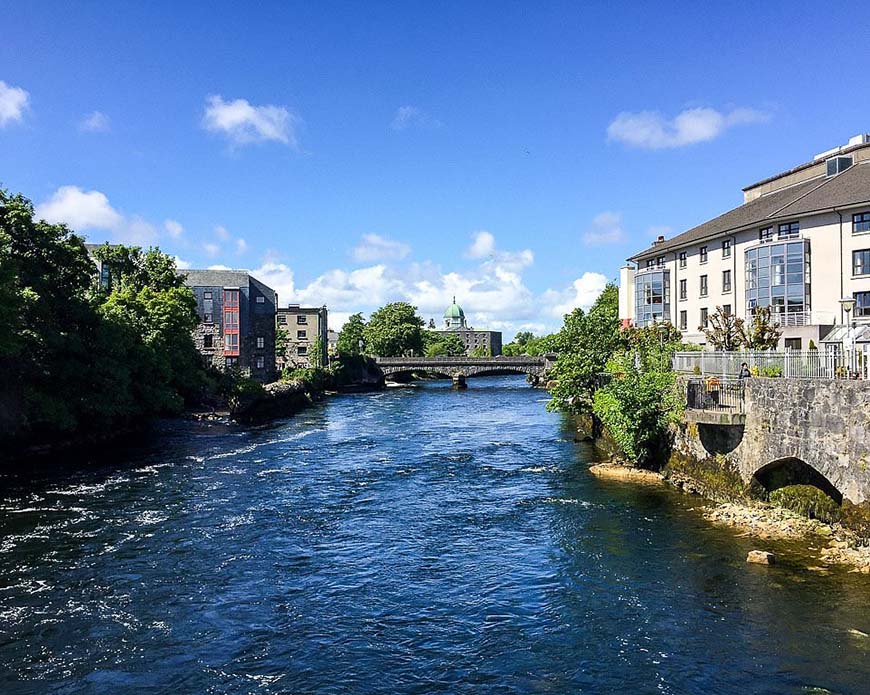
Poitiers greets with quiet confidence. Tucked into the rolling countryside of western France, it wears its history like an old cloak—Romanesque churches, medieval lanes, a quiet hum of students from the University, and the kind of elegance that doesn’t clamor for attention. Yet, it is not the architectural legacy that first calls attention. Beyond the city walls, where limestone lanes give way to forest floors, there lies an intricate network of ecological trails that seems almost too generous for a town its size. And so I begin—not at a cathedral, but at the edge of the Clain River, the first thread in the wild tapestry that stretches in every direction from the city.
2. The Clain River Walk: A Ribbon of Life Through the Land
The Clain River Trail winds north and south of the city like a living artery. Along its banks, I find ancient willows bent toward the water, their limbs sagging with age and wisdom. The trail here is less a constructed path and more an invitation to wander. The river hums quietly beside me as I walk—a silver streak that threads through poplar groves and wildflower meadows.
At dawn, mist curls above the surface like steam from a forgotten cup. Herons stalk the shallows. Moorhens dart between reeds. There are otter tracks, faint but distinct, pressed into the muddy banks—a whisper of movement in the hours when human feet are absent.
The trail stretches nearly ten kilometers in both directions from the city, well-maintained in parts and deliberately unmanicured in others. Fallen logs become bridges. Pools carved by time hold reflections of ash trees and clouds. This is a corridor not just of water, but of memory.
3. Boivre Valley: Among the Whispering Oaks
To the west of Poitiers, the Boivre Valley offers an entirely different palette. The terrain rises gently into low wooded hills. The ecological trail that traces the Boivre River is less trafficked, but rich in biodiversity. Oaks dominate here, many centuries old, and their canopy filters sunlight into a green dusk even at midday.
The trail meanders through old stone mills and forgotten orchards now reclaimed by brambles and birdsong. It is here that nightingales sing boldly, even in daylight. Their song, rich and liquid, fills the underbrush. I pause often—not for rest, but to listen. Somewhere above, a buzzard circles on a thermal, its call falling like a bell across the valley.
Walking this route in spring reveals an astonishing diversity of woodland flora: bluebells, wood anemones, dog’s mercury. The earth smells of damp moss and last year’s leaves. If the Clain is a corridor, then the Boivre is a cocoon.
4. Les Rochers de Beauvoir: A Cliffside Refuge
Southeast of the city, near the commune of Beauvoir, limestone cliffs rise unexpectedly from the surrounding fields. This is not a trail one stumbles across—it must be sought. But once arrived, the reward is immense.
The ecological trail here clings to the cliff’s edge in places, winding through a habitat unlike any other in the region. Mediterranean microclimates hide in the stone crevices. Lichens paint the rocks in gold and rust. Peregrine falcons nest high above, their cries echoing like sharp peals of thunder.
Below the cliffs, dry grasslands open up—sun-drenched and aromatic with wild thyme, juniper, and lavender. Butterflies are thick in the air: swallowtails, fritillaries, blues. Lizards scurry between warm stones. Everything here moves quickly, with an energy borrowed from the sun.
At a particular outcropping, I sit for nearly an hour watching the light shift across the valley below. The town of Ligugé sits in the distance, small and serene. But up here, the world is raw and bright and alive.
5. Le Bois de Saint-Pierre: A Living Classroom
South of Poitiers lies a forest that combines wild beauty with carefully curated educational opportunities. Le Bois de Saint-Pierre spans several hundred hectares and includes both dense woodland and open glades. It also houses an environmental education center and a small zoo focusing on regional species, but the trail system here is the true treasure.
Marked loops of varying lengths weave through pine groves and mixed deciduous stands. Some paths are wide and welcoming to families with children; others are narrow and overgrown, best taken slowly. What sets this place apart is its intentional design—informational signs appear discreetly, not to distract but to enhance. Details on the migration of butterflies, the role of fungi, the life cycle of the forest floor—it’s all here, presented like an open book.
The forest is especially moving in autumn. Rust-red leaves crunch beneath the boots. Chestnuts litter the path. Jays scream from the treetops. In one particularly quiet stretch, I spot a red deer, frozen mid-step, eyes alert and shimmering. We share a long moment, then it is gone.
6. La Forêt de Moulière: The Grand Tapestry
If the forests around Poitiers each have a character, then La Forêt de Moulière is the old sage. Located northeast of the city, this vast woodland—over 6,000 hectares—is one of the largest contiguous forest areas in the region. The ecological trails here range from casual strolls to full-day treks.
My route follows a loop of about 15 kilometers, entering near the commune of Bonneuil-Matours. Early on, the trail cuts through damp thickets where amphibians thrive: fire salamanders, tree frogs, and agile frogs. Later, the land rises slightly, and the oaks give way to beech, the trunks white and smooth, the canopy like stained glass.
The trail passes an old Roman road, nearly lost to the undergrowth. For several kilometers, I walk in near silence, broken only by woodpeckers drilling into deadwood and the rustle of wild boar in the distance. The ecosystem here is robust: deer, foxes, badgers, even the occasional genet.
Near the center of the forest lies a clearing known as Le Grand Chêne—The Great Oak. It is massive, nearly thirty meters tall, its trunk gnarled and twisted. Local legend claims it’s over four centuries old. Beneath its boughs, the air feels cooler, reverent even.
7. Marais de Saint-Sauvant: Wetlands of Subtle Beauty
To the south of the Boivre River, near Saint-Sauvant, an entirely different ecosystem reveals itself: wetlands and floodplains that thrive with life. These marshlands are not immediately dramatic—they lack the towering trees or sweeping vistas—but they hold an intimacy that rewards patience.
The ecological trail here is raised in parts, to allow passage through areas that remain saturated for much of the year. Willow thickets crowd the edges. Dragonflies zip across the surface of quiet pools. In late spring, the area transforms with wild irises and forget-me-nots blooming in dense clusters.
Birdlife dominates: reed warblers, kingfishers, bitterns. Their calls are layered over the continuous chatter of frogs and the whir of insects. At a wooden bird hide near the far edge of the marsh, I sit for over an hour with binoculars trained on a distant heronry. Dozens of nests, each occupied by a gangly juvenile learning to balance on narrow branches, framed against the pastel sky.
The smell here is unique—wet soil, tannic water, blooming algae. Not unpleasant, just unmistakably marsh.
8. Rural Trails Near Croutelle and Fontaine-le-Comte
West of Poitiers, near the sleepy villages of Croutelle and Fontaine-le-Comte, lies a network of agricultural paths that blend farming and nature conservation. These trails aren’t officially “ecological” in designation, but they might as well be. Here, man and nature coexist in a kind of quiet harmony that feels increasingly rare.
The trails pass hedgerows rich with blackthorn and hawthorn, small copses of elder and hazel, and occasional orchards left to grow semi-wild. Skylarks burst into flight from the furrows. Hares dart across the tilled earth. Along a ditch, I spot a stoat, its black-tipped tail vanishing into the underbrush.
In one field, a farmer waves from his tractor as I pass. The earth smells sweet, recently turned. At a bend in the road, a small shrine—weather-worn and mossy—stands watch over a cluster of ash trees. A buzzard cries overhead.
9. Chauvigny Trail System: Stone and Sky
Further east, near the medieval town of Chauvigny, trails blend ecological interest with architectural drama. The town’s fortress looms above the Vienne River, and from its base, several trails radiate outward, hugging cliffs, dipping into wooded valleys, and skirting ancient quarries now overrun with vegetation.
One particular trail descends through a gully dense with ferns, crosses an old Roman bridge, and ascends into dry heathland—unusual in this part of France. The soil here is sandy, the vegetation sparse: gorse, broom, and heather dominate.
Kestrels nest in the crumbling ramparts above. Ravens circle. Butterflies dance in the updrafts. At times, the trail narrows to a ledge barely a meter wide, stone on one side, air on the other. I move carefully, but never hurriedly.
10. A Living Mosaic That Breathes
Every trail I’ve walked outside Poitiers reveals a different ecological story, woven through a landscape that refuses to be summarized. There’s a generosity to the land here—not only in diversity, but in accessibility. These are not remote wildernesses, but living corridors stitched into the daily rhythm of local life. Children ride bikes along paths that pass centuries-old trees. Couples walk dogs near wetlands teeming with birdsong. Elderly men fish in oxbows where dragonflies hover like forgotten ideas.
Poitiers itself never vanishes far behind. Its spires are visible from distant ridgelines. Church bells echo faintly through woodland clearings. Yet the trails draw ever outward, into forests, across rivers, along cliffs, through marshes, and into the wild heart of Nouvelle-Aquitaine.
These paths are neither forgotten nor preserved in glass. They are walked. They are loved. They are alive.